The rennie roundtable is a conversation series about the ideas shaping real estate and the people willing to say something real about them.
No press releases. No talking points. Just honest conversation about what's happening, what's next, and what most people in this industry aren't saying out loud.
Episode #2: Built to Last | Greg Zayadi x Mauricio Umansky
"Anybody that tries to be great for everybody is just going to be mediocre."
— Mauricio Umansky, Founder and CEO, The Agency
Real estate has never been more visible. But visibility and durability are not the same thing, and the industry is beginning to understand that distinction.
Transaction volume is near a 30-year low. AI is reshaping who works in real estate and what their role looks like. The inflated years of 2020 to 2022 are being set aside in favour of a clearer read of where the market actually stands. And in gateway cities from New York to Vancouver, the tensions around affordability, consolidation, and what luxury means are consistent — and worth paying attention to.
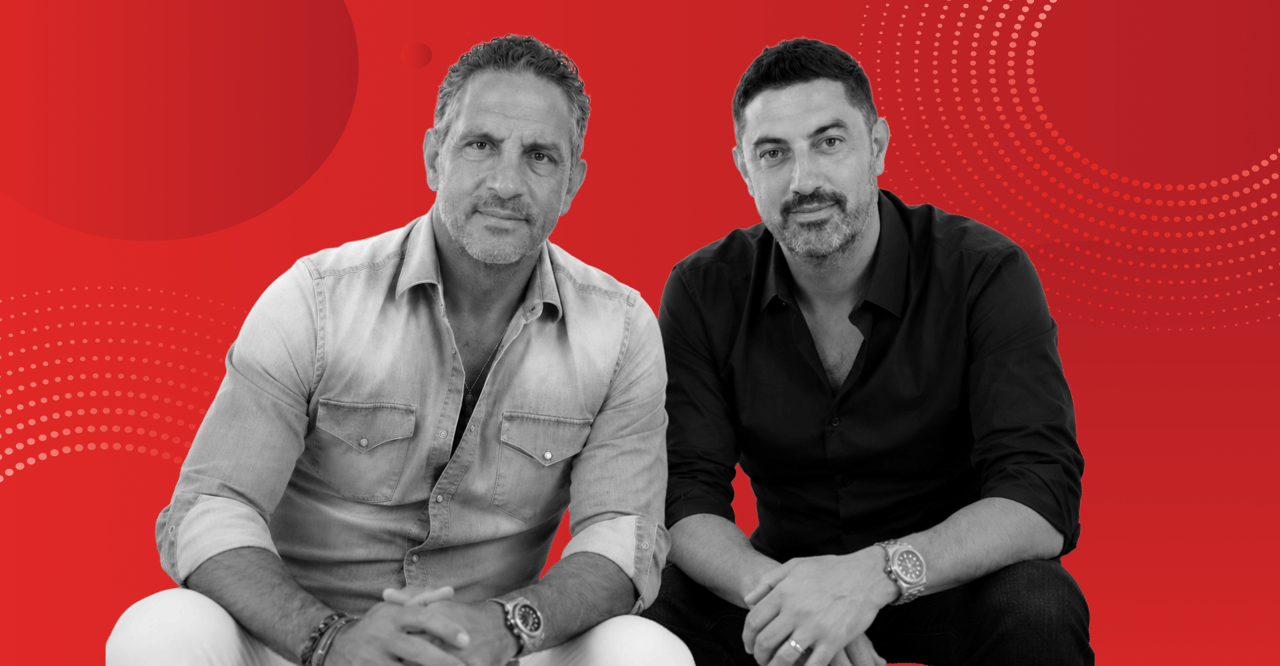
Greg Zayadi, President of rennie, and Mauricio Umansky, Founder and CEO of The Agency, sit down in New York to talk about what this moment demands of leaders and developers, why culture and brand matter more than ever, and why the most durable asset in real estate is still the individual and the relationships they build.
Featured guests:
Greg Zayadi, President, rennie
Mauricio Umansky, Founder and CEO, The Agency
Moderated by Emma Reynolds, Real Estate Journalist
The Agency X rennie Learn more
TRANSCRIPT:
Mauricio Umansky: Because of AI, you're gonna have the ability to be way more efficient.
Greg Zayadi: Oh, we have an affordability crisis, we have a cost of delivery crisis, we have socioeconomic crisis. Every city is working through the same thing. It is not a uniquely New York problem. It's not a uniquely LA problem.
Emma Reynolds: What feels fragile and, you know, maybe broken in the market?
Mauricio Umansky: That was a fake time anyway. We define it in our rule number one, right? No assholes.
Greg Zayadi: Love it.
Mauricio Umansky: [laughs]
Greg Zayadi: Nice and direct.
Emma Reynolds: [upbeat music] Hi, my name is Emma. We're here, um, filming Rennie Roundtable. We're here with Mauricio, founder of The Agency and Greg, um, with Rennie. Hi, guys. How- how are you?
Mauricio Umansky: I'm great, Emma. How are you doing this morning?
Emma Reynolds: We're good. We're in New York. We're in this beautiful space.
Mauricio Umansky: What a beautiful space, by the way.
Emma Reynolds: Yeah.
Mauricio Umansky: I mean, this is stunning. Um, this penthouse right on Spring Street is just incredible. I love it. I love being in New York.
Greg Zayadi: It's got an amazing view of the water.
Mauricio Umansky: The Hudson River-
Greg Zayadi: Yeah.
Emma Reynolds: Mm-hmm
Mauricio Umansky: ... in case you d- in case you didn't know.
Greg Zayadi: I was gonna guess, but I wasn't really sure.
Mauricio Umansky: [laughs]
Greg Zayadi: I'm figuring it out. I'm from Vancouver. What do you think?
Emma Reynolds: Yeah. That's- that's understandable.
Mauricio Umansky: Yeah.
Emma Reynolds: Um, so I'm excited to chat with you guys today about, um, you know, just the state of the market and insights from, you know, your careers. I want to start with a bit more of a nuanced question before we get into the momentum and the excitement and the innovation in the real estate market. I think that from the outside, uh, real estate has never been more visible. You know, there's these viral moments. There's so much coverage on these trophy and legacy properties. It's a really exciting market. So I would love to know, apart from the headlines, what feels fragile and, you know, maybe broken in the market that you are experiencing now, you know, in your kind of everyday career?
Mauricio Umansky: I mean, I don't know if there's, like, anything that really feels broken. I think everyth- I think, like, there's just a lot of change happening right now. We're- we're in a moment right now where the real estate industry is really changing, more from, like, an inside baseball type of thing versus the, you know, the consumer market type of thing. There's tremendous advances in technology. From a marketing perspective, there's gonna be some great, you know, new tools, new ways of looking at houses, new search tools, et cetera, et cetera. But, you know, nationally in the US right now, I think that there's just a lot of consolidation going on between the real estate brokerage firms. There's a lot of conversation about, you know, National Association of Realtors, the breaking up of the National Association of Realtors, private listings, off-market listings, all of the regulations, you know. Should there be a national MLS? Should there be one? I think we're gonna see a lot of change. I think we're gonna see the real estate agents decrease. Because of AI, you're gonna have the ability to be way more efficient. So, you know, currently today there's probably about 1.3 million real estate agents in the country. My prediction is that three years from now, there's gonna be half, and I think that the good real estate agents are gonna be doing more deals. You know, right now 7% of the real estate agents do approximately 90% of the volume, and I think that's gonna even compress. I think we're gonna go to, like, 5% of the agents are gonna be doing 90% of the volume. So I think that that's a lot of, you know, the stuff that's gonna be changing in the industry. From a market perspective, there's a lot going on. You know, we've been on a three-year low in terms of transactions right now. Uh, since- since 1994 was the last time we had this type of volume transactions, uh, which was the savings and loans crisis, so we're even lower than the 2008 crisis right now in terms of transaction volume. But that's starting to pick up, you know, and we're, we have multiple issues going on right now in the market. We've got high interest rates, but we also have high inflations, right? So from a, from a real estate perspective, it's gonna be very difficult to then get lower interest rates because of the high inflation that's still happening right now. So until we can control inflation, we're not gonna be able to control, you know, interest rates. Um, I don't know if I answered your question, but I kind of threw it all over the place just to...
Greg Zayadi: [laughs] No, you know what I think is, is interesting about y- you talked about consolidation, and I think the interesting piece of consolidation right now, and, you know, to your, your question about, I won't call it what's broken in the market, but what's, what the market's realizing. You know, Mo and I are having a lot of fun traveling to all kinds of cities. He travels much more than I do, but I think we've been in Miami this year, LA, New York a couple times. All of these gateways-
Mauricio Umansky: We were in Mexico, in Puerto Vallarta.
Greg Zayadi: Yes, exactly. So-
Mauricio Umansky: Oh, no, we have not gone there. I forgot.
Greg Zayadi: We will next.
Mauricio Umansky: We will go there. Yeah, that's-
Greg Zayadi: Same this weekend. Um-
Mauricio Umansky: I felt like we were going there
Greg Zayadi: ... we should. Um, but no, so the term that we use is gateway cities, and what we're having a lot of fun with is looking at all these gateway cities. So there's about 13 gateway cities in North America. They're all suffering from the same problem. Every city wants to think it's unique. It's like, oh, we have an affordability crisis. We have a cost of delivery crisis. We have socioeconomic crisis. We have a political crisis. Our municipality sucks. Our government sucks. Guess what? Every city is working through the same thing. It is not a uniquely New York problem. It's not a uniquely LA problem. Yes, San Francisco's getting much better now.
Mauricio Umansky: Yep.
Greg Zayadi: But it's sort of leading the pack forward, and it's showing us a bit of the model. So I think what's getting interesting with sort of the consolidation of brokerage and the industry and shrinking of it, which I, I 100% agree with Mo on, is that the gateway cities are also getting more connected than ever. And when you tie that up, which Mo can probably speak to more, to sort of the affluent market, the affluent market's looking everywhere. So this $10 million penthouse, the buyers could be from any city in North America.
Emma Reynolds: Given that, what is a narrative that you find misleading in the market right now? Is there anything, you know, that people see maybe from the outside that feels different from inside the industry?
Greg Zayadi: False narrative out there is that nothing's selling. And reality is markets might be off by 20% to 30% on absorption. So I think to Mo's point, over the last two, three years, we've seen a slowing market.
Mauricio Umansky: We've also started to see a beginning of an increase now.
Greg Zayadi: We are.
Mauricio Umansky: Like this year, 2026, we have had a little bit more transactions, so I agree with you. There's definitely stuff selling.
Greg Zayadi: Yeah, that's what people have to realize is that real estate's not going anywhere. People still need homes. People still get married, divorced, kids. Like, real estate is a fundamental aspect of our world, and in many major cities, which is kind of what we always focus on is the major gateway cities throughout North America and globally for the agency- It, it's, it's still an incredible industry, and the consolidation that's happening is, is getting very exciting.
Mauricio Umansky: I think it's exciting 'cause there's a pent-up demand right now. Because we've been in so low, that's what's starting to cause, you know, transaction volume to increase again.
Greg Zayadi: Yeah.
Mauricio Umansky: And we're seeing the transaction volume increase again. In Los Angeles alone, I just looked at this stat, we've gone from 56,000 transactions last year to, uh, I think it was like 67,000 transactions last 12 months. So you're starting to see that increase, which I think is exciting. If you're listing your home, I think the critical piece is to make sure that you, um, you price it correctly and you listen to your real estate agent and your advisor to do it right. Because when the house sits and you price it too high, it's just not gonna sell today.
Greg Zayadi: The best comment is everybody wants yesterday back. So people are looking to markets of 2015 or '16. They're looking to what was 2021, part of 2022. They want those numbers back. They want yesterday back, and M- Mo is exactly correct. I think what's happening is the market is getting very pragmatic about where it is today, and when that pragmatism shows up, you start to see more and more transactions.
Mauricio Umansky: Yeah, and the thing that people have to realize is that that yesterday, which is, you know, post-COVID, that was a fake time anyway. Like, just-
Greg Zayadi: Interest rates were zero.
Mauricio Umansky: Well, but not only that, the amount of money that was thrown in the economy, pumped into the world, the global economy, not only the US economy, but it was just unprecedented times. And when you have that kind of compressed transaction volume, you're inevitably going to go. So, you know, I always tell people, "Just forget about those years. Analyze, you know, your base year should be 2019."
Greg Zayadi: Mm-hmm.
Mauricio Umansky: Right? Forget about that, you know, moment of 2020, 2021, tw- early 2022, and that just happened. It was a moment that happened that we'll never see again. But when you study a market, you just have to erase that in my opinion, and it's really 2019 and before, and then post, you know, 2023.
Greg Zayadi: Yeah.
Emma Reynolds: I think it's interesting, you know, the idea of yesterday, right? Like, people just want, you know, how it was, how it was before. Looking forward, what do you think that brokerages, firms, agents need to know, who's gonna succeed, who's doing it right, that, you know, in the next five or 10 years that it will endure?
Greg Zayadi: The partnership that we have going, Agency and Rennie, is because there's a lot of common factors with it, and I actually think the first thing is, um, an aspect of brand and culture. So the real estate industry bifurcates in two zones. So I call it there's the lone wolves or low cost, no cost, cloud-based brokerages. That covers honestly about 70% of the market out there. And then there's those who wanna be part of something. So Agency, and I've gotten to spend a ton of time with the team, the company at a few different events and, and similar with us in a much smaller form, everyone wants to be part of it. You can almost call it a lifestyle brand, which is a super interesting comment, but I think that's gonna be a key piece moving forward, is are you part of something? Do you have a brand you can stand behind? Do you have a culture you can be part of? Because that allows the companies to actually invest in the platform. And Mo was talking a bit about the technology that's happening out there. So we sort of talk three things. There's the people, the platform, and the process that comes with it. You need to be part of something in order to take advantage of that, and those are the brokers that are gonna succeed.
Mauricio Umansky: I agree with that 100%, and you know what is interesting right now is that because of all the consolidation, there's less and less flavors out there. I've always said there's 31 flavors of ice cream, f- you know, and there's something for everybody. What's happening right now in the real estate brokerage world is that now we're down to six flavors. There's less choices, less options. And so I think that gives some, you know, us, you know, the Agency, the Agency Rennie, a real opportunity to shine, a real opportunity to deliver incredible service, innovation, be disruptive, be different while everybody else is, you know, figuring out, you know, how to operate together, how to maneuver, uh, how to do things. We don't have to worry about that. All we have to worry about is how to deliver the best service, sell the most product, y- you know, give an incredible, uh, experience to our real estate agent that work for us, give an incredible experience to our developers that hire us, and to our clients that, you know, that hire us. And so we don't have to worry about all of the noise that's going on.
Greg Zayadi: Nope.
Mauricio Umansky: Right? We just get to do what we love to do, which is sell property.
Greg Zayadi: Yeah. Real estate's been impacted by private equity is the truth. If you look at it now, I don't know what the percentage would be, but with a couple key firms being publicly traded entities and now controlling the lion's share of tr- of brokers who cover transactions, there's different motivations there. These people are accountable to a public market and a board, whereas privately held companies, which in most cases historically real estate was not a publicly traded thing. It was very, very localized. A really great, uh, I think it's exactly Mo can tell the story about how Agency started, but you've got one of the top agencies in the country who goes, "Now I wanna do it for myself and on my own." These were always little great salespeople who then built companies around them, and great people wanted to work with them, and you built up these firms. But they were never driven by public markets or all these other factors that are driving what they have to do.
Mauricio Umansky: And I think the other unique thing about it, uh, that we have right now in terms of our companies is that, uh, we're a luxury brand. Um, and I think that the economy, what we're gonna start seeing, and I mean, if you look at everybody, it's gonna be high luxury, right? The LVMHs of the world, you know, all of that, you know, what have you, Diors, you know, super high luxury, and then, like, really the mass markets. Unfortunately, that middle market is kind of disappearing. But, you know, we're positioned to be that luxury brand, and I don't know if there's anybody else that's positioned to be a luxury brand right now.
Greg Zayadi: No, and it's, it's, it's really great. I, I love playing ... Where our partnership comes from is new development, right? So we're sitting in New York, the mecca of new development. It is all condo development, rental development, and those are major gateway cities. And you know, years ago there was a book called, uh, When Mayors Rule the World, and that was because the power is actually concentrated in the cities. And yes, COVID changed people's perceptions a little bit. COVID changed the back to work. But that's all coming back now. You watch what's gonna happen to major cities, and that is where you see affluence. That is where you see sort of the elevated pricing, and it is something that we have to grapple with. I was just in Hong Kong, and you look at some of the, the, the major cities in Asia, and they have really figured out how to create density, how to create a service base within it. So how do you balance these things when you've got affluent cities, affluent markets that still need people to support All the other services, whether that's nurses, doctors, ambulance, coffee shops, service-based people. So this is what cities are grappling with, and it's super fun for us to be playing in those areas. That was a bit tangential and totally off, but-
Mauricio Umansky: Totally off. I don't even know what you're talking about.
Greg Zayadi: [laughs]
Emma Reynolds: I'd love to hear, like, how did your partnership start? How did you guys meet, and what, you know, what made you want to-
Greg Zayadi: Tell the... You tell part of it.
Mauricio Umansky: You tell that. You start it, and I'll interrupt.
Greg Zayadi: Organic. It's, it's so funny how these things go. So 18 months ago, I was running around LA, trying to figure out how we could grow the company, 'cause we were doing some stuff in Seattle, Bellevue, and we were trying to look for opportunities in LA. And, uh, through that, uh, I ran through a project, met a nice young man. A coffee, led to a drink, led to me getting some information that I knew that there was some change coming to the agency. And I kind of sat back for six months and waited. And when I heard that, that their new development team was no longer with them, I called a buddy of ours, uh, Mark McLaughlin, who started a company called Pacific Union and, and sold it to Compass, and said, "I'd really love to meet Mauricio." Now, you can imagine from my point of view, I'm like, "Okay, this is the agency. I've certainly heard of his name before." And I'm going, "Okay, let's see if this works." Within 12 hours he called me back. Best phone call. Just amazing how open, comfortable, direct Mo was. Called me back the very next day and said, "I've got a project in Punta Mita we want to pitch on."
Mauricio Umansky: Yeah. And then we started pitching on it. We went for the pitch. We prepared materials together. Uh, we worked very good together. The c- two companies were, like, synergistic, like, right off the bat, which was pretty awesome. You know, we really are, uh, two companies that really complement each other's weaknesses. Our strengths become together, and it's that perfect yin and yang, you know, situation where, like, the two companies together are 10X more powerful than the two companies separate, particularly when it comes to new development. I mean, Rennie's, you know, longstanding, you know, probably one of the first and best, you know, project sales teams, you know, in, in the world, globally. They've got amazing resource. They've got amazing technology, the backend, the CRMs, all of this stuff that developers love, that institutional companies love and need, that we have mediocrely, and we can deliver on it. But now together, coupled with the agency's global reach, with its market, you know, strength, with the sales force that we've created, we can now start moving property globally, which I think is critical right now because property is not sold, uh, locally anymore. It is local, but it needs to be sold globally. Um, and that's really when you're gonna have a successful project.
Greg Zayadi: It was such an opportunity to take what we do and bolt it into a company that has a global brand, global reach, 3,500-plus agents around the world, 160-plus offices in all the best countries. So to be able to attach to that is amazing. Not to mention that, again, it is the largest privately held luxury brokerage left, and these are all things that we can take advantage of. And tying that a little bit to where the market's at today, you were chatting about this a bit yesterday. Now's the time to do these things. In two to three years, the market will be at a pace where you won't have the opportunity to build partnerships. You won't have the time to build the systems and the platform needed to take advantage of it.
Emma Reynolds: And kind of going back to what you were saying before, this idea of culture and, you know, synergy and how you guys just, you know, your teams got along, and it all worked out just organically from the start. What are some non-negotiables that in terms of how you lead your business, whether that's who you hire, the deals you do, the culture you shape, the standards?
Greg Zayadi: I want to jump on this one right away because to me it's such a key one. So we have a line that is, "We hire fundamentally good humans." And we all have perceptions, so I've gotten to spend a bunch of time with Mauricio, and Bob Rennie, who's our founder, he has a line that says, "It costs nothing to be kind." And when I wrote the email to the company to say, "Here's, here's what's going on, uh, we're doing this strategic partnership with the agency," and I said, "The one thing that warms me with it is Mauricio and Bob are two of the kindest, most gracious human beings I've met." And it doesn't matter where we go, what restaurant we're walking through, what coffee shop we're in, you watch the two founders of these businesses acknowledge everyone, whether it's the doorman, the barista, or the CEO of a billion-dollar company. I watch both of them treat everyone equally. And that to me is a non-negotiable.
Mauricio Umansky: I love that. I agree with that. It's all about people for us, and so it kind of goes the same way, and thank you for saying that. But yeah, it's all about people. We define it in our rule number one, right? No assholes.
Greg Zayadi: Love it.
Mauricio Umansky: [laughs]
Greg Zayadi: Nice and direct.
Mauricio Umansky: It's that simple. You know, our rule number 10 is all rules are meant to be broken, except for rule number one. [laughs]
Emma Reynolds: Love that. Um, I'm curious how your experiences early on in the industry shaped how you lead and how you do your business.
Mauricio Umansky: I think for me it's not so much about my experiences in the industry that have anything to do with the way I lead. I think that the way that I lead is more just about how I perceive people, how I read the room, what I like to look at. You know, I like to give everybody... It's not that I'd like to, I require everybody that works for the agency to have their own thoughts, their own expressions. I want them to be creative. I want them to be innovative. I like it when people take chances and risks and make mistakes. Like, for me at our company, it's not about not making mistakes. It's about trying things. It's about being innovative. It's about changing. And you can't change and you can't be great unless you fall a couple of times. So, uh, I encourage that in everybody. We hire, you know, as Greg just said, you know, the best people, and we allow them to do what they do best. You know, from my perspective, I like to delegate. I like people that do their jobs, because the reason they're in that job is because hopefully they're the best at that job, at that position. And so I don't want to get involved in the little nitty-gritty stuff or all of that stuff, you know, at all. And, uh, that's kind of the way that I look at, you know, uh, leadership in terms of creating an amazing company that can actually deliver amazing results, is by having amazing people do amazing things and take risks.
Greg Zayadi: You know, for me, 25 years in the industry, there, there's two things that have sort of really created, I'll call it, a- The foundation of, of how we run the company or how I like to lead is one, acknowledge that we're in a service-based industry, which means our product is the people. Like, we don't manufacture stuff. We don't build stuff. We represent and support the brokers who sell and buy people's homes for them, which again is one of the most biggest decisions anyone's gonna make in their life. So acknowledging always that we're a service-based company sets your perception of what you have to do. I think the other real benefit, and this kind of has to do more with the opportunity to do new home development, is we've always been in the B2C side of the business. So I've spent my career sitting in rooms with incredibly successful, smart people who have failed many times to your point in life. And through that, you take away so many key lessons and learnings that just build over time or stack over time. Uh, the, the one final one, and again I'll tie this wh- where I see Mo and where I see Bob doing a lot of similar things, and I myself try to emulate that, is stacking. So how many coffees do you have a week? How many lunches do you have a week? How many breakfasts do you have a week? How many people are you meeting with? And every meeting that you have, you take that bit of information and carry it into the next meeting. And through that, you build this inc- incredibly large book of knowledge. And again, because we're in the service business, because we're in the people business, the ability to trade knowledge is actually all we ever do.
Emma Reynolds: In terms of development, what advice would you give to developers now in the market, and what would you tell them maybe to stop doing?
Greg Zayadi: Oh. I'll let you run first.
Mauricio Umansky: I mean, my advice to developers is to, um-
Greg Zayadi: Hire us
Mauricio Umansky: ... is to h- uh, uh, obviously it's to hire us. It's to surround yourself with the best people always, period, end of story, whether you're hiring the best designer, the best architect, the best real estate brokerage firm, people that are gonna, you know, really deliver on all of that. But to me, the one piece of advice that I would give a developer is something that I learned at a lesson that a Harvard professor talks about, and she has a great class on this, is that in order to be great, you have to dare to be bad, okay? And what developers need to do is not deliver vanilla property, not deliver something that's good for everybody. Really decide what you're gonna be great at. If you wanna deliver a development that is for the masses, deliver it at the lowest and best pricing.
Greg Zayadi: Mm.
Mauricio Umansky: Okay? If you wanna deliver something that, you know, you're gonna break records, take risks. Hire the best. Like, deliver on that, right? Hire the best architect. Hire the best brokerage firm. Hire the best people, and take risks. Like, really do something that is, might be different, that's not for everybody. But when something is unique, people will pay for it, right? So dare to be bad.
Greg Zayadi: Yeah, yeah. There was a panel yesterday. Uh, Young Woo, uh, one of the developers here in New York City, he, he echoed what Mo just said, which was give people space to do the best work. So hire the best team. Now, one thing I've always found too is look for the dynamic. If you don't think there's gonna be a ... Like, if we didn't get along, this wouldn't be a ... We wouldn't have a workable relationship. You have to have fun. If you're having fun in the boardroom, the best work shows up. So often when we're speaking with developers about hiring a creative firm or an interior designer and they're looking at their work, right? They're like, "Well, let me see what they've done." I actually don't care about their work because you've chosen them already because their body of work meets what you're looking for. Can you have fun with them in the boardroom? Can you create a dynamic where the energy and the creativity starts to shine? That's often where you get the best work.
Mauricio Umansky: I agree.
Emma Reynolds: Yeah, I think that's an interesting perspective, and that's what makes the agency so unique and, you know, not a lot of brokerages and developer, people don't think like that, you know?
Greg Zayadi: Now I have a question for you, Emma. Tell us a little bit about you.
Emma Reynolds: So I live in New York. I'm a freelance journalist covering the luxury market. Um, I cover real estate, travel, and all things lifestyle for-
Greg Zayadi: What's your favorite part of New York?
Emma Reynolds: I mean, just the energy, I think. That's so, that's so basic, but, I don't know.
Greg Zayadi: That's okay.
Emma Reynolds: It's just fast paced. It's, it's the best, best way to operate, I think.
Greg Zayadi: Would you ever live anywhere else?
Emma Reynolds: Um, London.
Greg Zayadi: Oh.
Mauricio Umansky: Like that.
Emma Reynolds: Mm.
Greg Zayadi: Actually, what's your favorite city?
Mauricio Umansky: So luckily for me, I don't have a favorite city. I love so many cities, and I love so many things. People ask me that all the time, like, do I prefer to travel to the ocean or the mountains? Like, do I prefer, you know, do I wanna be in a city? Like, to me, like-
Greg Zayadi: Well, that's your tattoo now. Doesn't it have the mountain and the ocean on it?
Mauricio Umansky: It has them both, exactly. Um, but to me, like, I mean, I love LA. I'm a huge fan of LA. I've always loved it. I live there. I love New York. I'm a huge fan of New York. I love Miami. I love Vancouver. I love Madrid. I love London. I love Paris. I love Hong Kong. I love Tokyo. I mean, I really think there's just so many incredible places in this world. Like, why ha- why do we have to pick one?
Greg Zayadi: Oh man, it's so true. [laughs]
Emma Reynolds: Where would you live if you didn't live in Vancouver?
Greg Zayadi: I want my life to be a third, a third, a third. My home is Whistler. I love being in the mountains.
Emma Reynolds: Love Whistler.
Greg Zayadi: Skiing's a passion. So if I can spend a third of the time there, a third of the time getting to enjoy work in cities. One of the best things about what we're doing right now is getting to come to all these cities and enjoy and work at the same time. It's not travel, it's not vacation, and it's not work. I don't know. It's just getting to meet really cool people. So, uh, for me, Vancouver and Whistler are my home-
Emma Reynolds: Mm
Greg Zayadi: ... and my home base. A third of the time I wanna just enjoy other cities around the world.
Emma Reynolds: Yeah, there's something, something good in each place, and-
Greg Zayadi: And now we get one last question.
Emma Reynolds: Yeah. I would love to know, I think what holds more weight in the real estate industry? Is it this idea of attention? Is it discipline, whether that's, you know, maybe not scaling at the same level that other brokerages do, you know, really sticking to your standards, or substance? Is it, you know, what you're listing? Is it, um, you know, what you're, what you're putting out there on the market? And, um, yeah, I'm, I'm curious if you guys have any-
Mauricio Umansky: When you ask what holds more weight in the real es- industry, are you referring-
Emma Reynolds: Yeah
Mauricio Umansky: ... like inside baseball, like amongst like the, within the industry-
Emma Reynolds: Yeah, I mean what inter-
Mauricio Umansky: ... or are you thinking about like the consumer v- vision?
Emma Reynolds: Consumer
Mauricio Umansky: Consumer perspective
Emma Reynolds: Or sorry, no, but what your, what you think about it. Like, um, is it, like what is more durable? What is more, I think, important to succeed from a brokerage standpoint in real estate? Um, and what takes you the furthest, I think?
Mauricio Umansky: I almost wanna say the same answer that I gave to, uh, what a developer should do. Like, dare to be bad. Like, learn what you're gonna be great at, and deliver on those, on that. Culture, luxury, you know, you can't be great for everybody. You don't need to be great for everybody. Anybody that tries to be great for everybody is just gonna be mediocre, and we don't want mediocracy in this world, period, end of story.
Greg Zayadi: Nope.
Mauricio Umansky: We want extraordinary, you know, events. We want extraordinary people doing extraordinary things. And that's one of the things that I think, you know, will stand out. I think that, uh, you know, having a boutique firm and a firm that's nimble, that we can do things, that we, you know, there's no red tape, that we can actually make decisions, and are willing to make mistakes, that allows us to do things, you know? And I think that, you know, that positions us in, in a really good place right now. When I look at our competition that's going on right now, I think there's gonna be multiple people that, you know, kind of are standing and survive. You know, there's, you know, businesses with tremendous amount of equity right now, but it's shrinking. It's consolidating, and you still need, you know, different choices for different people. So I'm very excited. You need to embrace technology. I think you need to embrace, uh, innovation, and that's what's gonna stand out, and that's what's gonna make, you know, particularly for us, you know, the agency, the agency Rennie, the combination of all of that stuff, I think that's what's gonna make us stand out over all of our competition.
Greg Zayadi: Yeah, what, what's gonna be enduring and durable is the individual and the relationship. And, you know, to tie that to what's happening out there, the reason that we're seeing so much consolidation is the, the marketplace, the industry, has realized that there's one person who starts and finishes a transaction. Yes, there's a lawyer, there's an insurance broker, there's a mortgage broker, there's an appraiser, there's an inspector. There's all these people who are involved in a transaction, and there's a lot of technology that takes you through that pace, but there's only one person that starts and finishes it. That's the realtor, the broker, the advisor, whatever term you wanna put to it. So I think the in- the, the enduring and lasting thing is gonna be the individual and the relationships they have. I actually don't know if in three to five years we'll be using terms like realtor or broker advisor, because that was con-
Mauricio Umansky: Well, let's just not even use realtor anymore.
Greg Zayadi: Yeah, agreed.
Mauricio Umansky: Let's get rid of that term.
Greg Zayadi: Absolutely.
Mauricio Umansky: Get it out of your dictionary.
Greg Zayadi: We use advisor, you use broker, like-
Emma Reynolds: [laughs] Yeah
Greg Zayadi: ... th- because that, that's an old way of thinking. And, you know, when you needed that person to give you listing information, when you needed that person to give you market data, there was a different way of being. But the insecurity in buying or selling a home is what's never going to change. It's the biggest decision most people ever make in their lives when it comes to the financial wellbeing and your family and your home. It's four walls and a roof that is security from the elements and, and the world. So yeah, to me, it's very much just the human being and the relationship. I don't care about AI, I don't care about technology, all of those things. You won't disrupt that person who starts and finishes the transaction.
Emma Reynolds: Yeah, absolutely. I think brokers are becoming more like lifestyle concierges almost.
Greg Zayadi: Super well put.
Emma Reynolds: You know? It's, it's-
Mauricio Umansky: Very
Greg Zayadi: Let's start using that one
Emma Reynolds: ... you know, they're the person that the client asks about, you know, the coun- country clubs around you, the schools, you know, the advice just in, you know, beyond the signing a lease, um, or a deal. So, um-
Mauricio Umansky: We're definitely gatekeepers, right? We're definitely concierges. I like that.
Emma Reynolds: Mm-hmm.
Mauricio Umansky: I think since we sell homes, we should just be butlers.
Emma Reynolds: That's, okay.
Mauricio Umansky: [laughs]
Emma Reynolds: That's a, that's a take.
Greg Zayadi: I'll, I'll tell you the funny story.
Mauricio Umansky: [laughs]
Greg Zayadi: Which is exactly along these lines.
Emma Reynolds: Okay.
Greg Zayadi: So about, uh, in 2016, uh, Bob and Kris Rennie, Bob's son, um, they hired Wink Creative out of... So they do, like Monocle magazine and all these other things.
Emma Reynolds: Right.
Greg Zayadi: So they're one of the top creative firms, um, in the world. They're out of London. And we went through a branding exercise, and, uh, you know, uh, uh, Kris is half Japanese, so Japanese culture runs through a lot of things we do. Bob's huge in the art world, so art and curation. And when we went through the whole exercise, they said, "Are the curator the consigliere or..." I forget the third one. And everyone thought that Bob was gonna pick the curator because of art, and he picked consigliere. And they go, "No, no, no, we don't wanna be like the Italian consigliere who, you know, is, like hiding around the..." And causing all kinds of, solving problems.
Emma Reynolds: [laughs]
Greg Zayadi: But a Japanese consigliere. And the Japanese consigliere is exactly what you just described or you just described. They're the lifestyle concierge. They're the quiet person behind the scene. They're not taking the limelight, and that's actually why when you look at rennie's logo, it's a little R. It's actually meant to be a Japanese man bowing.
Emma Reynolds: Oh, interesting.
Greg Zayadi: And it's these subtle things I think that, that sort of ring through as, as... Yeah, we grew up with anyway.
Mauricio Umansky: I love that.
Emma Reynolds: Yeah.
Greg Zayadi: It's a cool story.
Emma Reynolds: Love that. Well, thank you guys for being here, and, um, talking on the podcast. It was great to chat with you, and enjoy the rest of your time in New York.
Greg Zayadi: Thank you.
Mauricio Umansky: Thank you, Emma. Thank you for doing this for us.
Greg Zayadi: Appreciate it.
Mauricio Umansky: Hopefully people get some really good information out of this.
Greg Zayadi: Yeah. And we'll do it again.
Mauricio Umansky: Maybe.
Greg Zayadi: [laughs]