The rennie roundtable is a conversation series about the ideas shaping real estate and the people willing to say something real about them.
No press releases. No talking points. Just honest conversation about what's happening, what's next, and what most people in this industry aren't saying out loud.
Episode #1: 50 Years of Thinking Forward | Greg Zayadi X Bob Rennie
Fifty years ago, Bob Rennie started in real estate with a phone and an instinct. He's been thinking forward ever since.
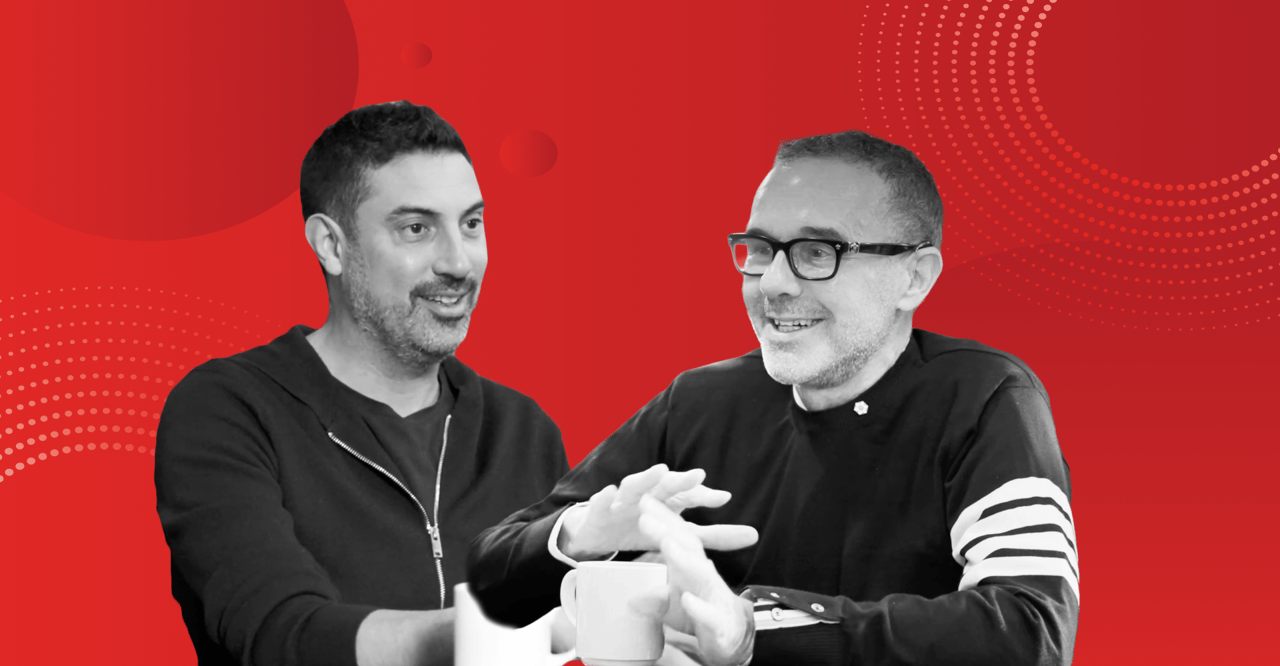
In this episode, rennie President Greg Zayadi sits down with rennie Founder Bob Rennie at the White Spot on West Broadway — to talk about what five decades in Vancouver real estate actually taught him.
They cover the instincts that shaped his decisions, the philosophy behind the Bobisms, what markets consistently get wrong, and what leadership looks like when no one is watching.
At one point Bob says it simply: "I can't be me unless I let you be you." Fifty years of thinking, in eleven words.
Fifty years in. The conversation isn't over.
Featured guests:
Bob Rennie
Greg Zayadi
TRANSCRIPT:
Passion's useless unless you turn it into a skill set
Passion is useless unless you turn it into a skill set
Yeah. It's just passion. It's a hobby then, and it's entertaining, but true passion, if you nurture it, it has to become a skill set.
Introduction: On March 11th, 2026, Rennie president Greg Zyadi and Rennie founder Bob Rennie met at the Broadway White Spot to reflect on Bob's 50 years in real estate. This is their conversation. [upbeat music]
Greg Zayadi: So we are here at White Spot, Bob, and it's been, I think, 50 years in industry for you.
Bob Rennie: 50 years December 15th.
Greg Zayadi: December 15th.
Bob Rennie: Yeah.
Greg Zayadi: And you know, look, it's kinda fun. You and I get to talk all the time. It's always over coffee. This is the original version of a podcast, I guess, where people actually sit, have a cup of coffee and, uh, chat. But why are we at White Spot? It's got a long history for you.
Bob Rennie: Well, I eat three meals a day, 365 days a year in restaurants.
Greg Zayadi: [laughs] I was gonna say, not at that one.
Bob Rennie: And, and breakfast is either at the Wedgwood downtown, I'm super OCD, or, or White Spot. White Spot used to open at 6:00, and I'd sit in the booth at the end if I was meeting anybody from City Hall, and it just works. It's comfortable. But going back in history when I was selling single family homes in the '70s, started in '75, nobody could show as many homes as I did. If you were looking for a home, I would show you 10 to 20 homes. I didn't care. Part of it is I got to meet 10 to 20 vendors. I got to meet 10 to 20 people showing their home, and they would see the attention I paid to the consumer. White Spot is, and it, and part of our family too on weekends.
Greg Zayadi: It's funny, you mentioned OCD, but the reality is I've gotten to learn from many people like yourself, and there's a lot of habits or routines that it seems very clear you've built up over the years. And I mean, I've been working with you since, you know, mid-2000s. What are some of the things that have stuck over 50 years that are just absolutes from a routine, as you call it, OCD basis that you think-
Bob Rennie: Well, if I walk in the house and a fork in the kitchen is moved, I can feel it. [laughs]
Greg Zayadi: [laughs]
Bob Rennie: So that's, that, that's, that's the, the, the extremes of it. But we, we don't even notice the habits in the company. But in somewhere in the '90s as we started to have 5 to 15 developers we were working with, I instigated, "I will see you every Tuesday at 10:00. I will see you every Thursday at 2:00." Lunches varied.
Greg Zayadi: Mm-hmm.
Bob Rennie: But just as you were beginning to say, "Where's ... We, we gotta talk to Rennie," you go, "Oh, no, I'm gonna see him on Tuesday." But we always knew we were going to be meeting, and my clients thought that they had a leash around my neck, but I [laughs] actually had a leash around their neck, is that we had a set time 'cause there's no way you could have that many clients and not have it scheduled. I came into project marketing seriously between '89 and '92, and I would just be at your whim. You wanted to see me, I would be there. But we had to get it organized if we were ever going to scale. We don't even know that that was instigated back then, 'cause once we have a client, you say, "Okay, well, let's meet on Thursdays at 4:00," and you don't even think of that that was part of the, the governance of the company.
Greg Zayadi: And 504. You wake up at 5:04. Your license plate has 504. What am I-
Bob Rennie: License plates are 5-4.
Greg Zayadi: 5-4.
Bob Rennie: The whole family. Part of it is if I pull up to a Safeway and I see a car that someone in the family owns like it, I can look at the license plate and know [laughs] it's somebody in the family. [laughs]
Greg Zayadi: [laughs]
Bob Rennie: It's, it's old school tracking. [laughs]
Greg Zayadi: [laughs]
Bob Rennie: You know, nobody wants to own a house at 44 West 44th. The Royalton Hotel in New York is at 44 West 44th, and I've entered two relationships in that. Have no idea whether it's fact, but four means death in many Asian languages.
Greg Zayadi: Yep.
Bob Rennie: Five means no. So if you have a choice of 888, which is eternity, eight, always close it when you, when you do it. I've had clients tell me, "Oh, that's too much pressure." But 5-4 ga- our home phone number was always 5400. It gave me an opportunity to respect that I understood the superstitions of four, but I found a way to deal with it, which is no die, 5-4.
Greg Zayadi: [laughs]
Bob Rennie: It's, it-
Greg Zayadi: It stuck
Bob Rennie: ... it stuck and I, I, I try not to change things. My phone, if I call you, it's blocked. It's been blocked for-
Greg Zayadi: Private number
Bob Rennie: ... 40 years, and I should change it. Now I have a joke that the only way you'll take my call is 'cause it's blocked, 'cause you don't know it's me.
Greg Zayadi: Um, you know, you, you bring up Asian culture, and obviously someone who continually comes up at a, as a, a theme in your life, an early person to help you build it is Mieko. What did she influence along the way that makes you who you are today? 'Cause when I think about art politics and real estate, I think there's aspects of Mieko in all of it.
Bob Rennie: Mieko backed me. Mieko and I met when we were 10 years old. We used to go to White Spot. I remember taking the ... My mother used to get, uh, she worked at the Villa Hotel as a server, and they'd give her passes to White Spot on 78th and Granville. We would take the bus there to go for a fancy lunch or dinner with, with these free passes. But Mieko and I met when we were 10 years old, married 19, 20 years old, and then Mieko became a dental technician and was great at her craft of making porcelain and gold teeth. And as the business started to grow, she left that to run the office for us. But Mieko came home one day and said ... I wa- I was working from 7:00 to midnight every day of the week other than Saturday and Sunday, where I would come home at 5:00. I would do two opens every weekend, and I w- I was burning myself out. I got to a point where I was selling a house a day. Completely different world then, but Mieko came home and said, "I found a space that's Sperling and Hastings. You're gonna open up your own company." I would have never done it. I, that's not me.
Greg Zayadi: She started your own company.
Bob Rennie: She, she said, "You're gonna kill yourself. You have to have staff around you. You, you have to grow." And at one time, we had 34% of the Burnaby market in our little office. So I wou- I would have never done it without Mieko. And Mieko is the one that gave one of the Bobisms, that a man that adheres to a position previously stated when times change is an idiot or a fool. And what it is is we, we all take a position, and then interest rates change, GST, HST, tax consequences come in, something comes into the market, and we still want yesterday back, and we refuse to, and we refuse to come off it. That expanded to my philosophy of is we're all computers. Information comes in, which validates the path I'm on, and I stay on that path, or new information comes in, and I have to alter that path. But most of us won't come off a decision that was made last year, and people will, can say, "Well, that's inconsistent. It's, it, it, it, it's flippant." No, you're constantly bringing new information in.
Greg Zayadi: I mean, the information's a really interesting one because especially in today's world of AI and everything else, you built the business. We run this company on data, and, you know, where it's coming today, and I think you kinda really define this is data needs context, right? If you don't have any context to the data, it can't be intelligent. With intelligence, you can tell a story, and with storytelling, you can be compelling. And I think it's, it's, it's that art that I've watched you do throughout time, which is relationship, manage, story tell, all while using sort of data and context.
Bob Rennie: The data, whether it's for here or whether we're in Israel or whether we're in Spain or whether we're in Bellingham, you take the data, but then you have to, you have to put in the culture, and you have to put in the climate that you're in. I find if I can arrive with data and graphs, my client never wants to look at it. But if I arrive without it, then it's just opinion, and it, it has to be opinion based on fact. You know, there, there's one of the Bobisms, it's not, it's not mine, that I rely on is Robert Monahan, is everybody is entitled to their own opinion, but nobody's entitled to their own facts.
Greg Zayadi: Mm-hmm.
Bob Rennie: And, and even if y- if you go, just thought of it, if you go back to 1975, I came into the business. I, I didn't have grade 12, didn't understand the market. But I realized in my neighborhood in East Vancouver, there was 42 and a half foot lots, 33 foot lots, but then there was something rare called 66 foot lots. And they could be subdivided if they weren't already two 33 foot lots. So I found every 66... I went down to the real estate board and looked through all of their maps, map books. [laughs] And I found every 66 foot lot from Rupert Street to Victoria Drive, from 22nd Avenue to McGill, virtually down to Wall Street to the water. And I wasn't into rejection, so I would send letters quarterly to everybody with a 66 foot lot, and I became the guy that controlled 66 foot lots, East Vancouver. And I would get up, I always got up early. I would get up at 6:30 in the morning, and I would go meet builders who were building 33 foot lot homes. Most of them, uh, heavy, heavy Italian and Croatian group. And I'd go for breakfast with them, and I just became that junior little nerd accountant guy. But I got to a point where I had signed interims in my briefcase. [laughs] And I would phone Vlado or Mr. Slomaslich, and I would say, "There's a 66 foot lot at Second and Renfrew. It's come on the market at $69,000. I think we should offer 72 and make sure we get it." And they go fill it in. And it's pretty hard for the rest of the market to compete with that knowledge base.
Greg Zayadi: Yeah. So when you think about, it's, it's funny, tying, you know, 50 years in this industry, and I'm gonna tie it to space. So from your kitchen table to Hastings to Hornby to Wing Sang to now being the baker, the butcher above the store as we move back to what is techni- what is your home. If you think about all those times from Hastings to Hornby to Wing Sang to now, what do you remember about the market, the business, or yourself in those different kind of stages or epochs?
Bob Rennie: I think my growth is about every five years. Not planned, I just, it's not that I get bored, but I know I have to fine-tune it. And so something has always moved along. But when we opened on Hastings, it was could we have 9 to 12 brokers? And then when we moved up on Hastings to 4701 East Hastings, the building was owned by Cliff Browning, the hockey player's father.
Greg Zayadi: Yeah.
Bob Rennie: He had an antique store there, and, um, I just felt we had to own the premises. So we, that was the first building. We bought it. I spent, in 1988, $400,000 on interiors. I wanted it to look like a law firm. The architectural firm thought I was insane. When we started Rennie and Associates, I, I hired Simon, I, I can't think of his name. He invented a game called Smoker's Wild. [laughs] But, and he did the logo, and he charged me $5,000 for it. He said 15 years later, he would've charged me 500,000 for it. But, and I said, "I want a 3D coding on all my signs so that when a car drives down the block, my signs light up. When I, when I started at United Realty, '79, 1980, I measured the sign, and I saw that my l- my name could be 5 1/4 or 5 1/8 inches high, and Bob Rennie would touch side to side, 'cause I wanted to create a brand rather than always just promoting the company I worked for. Wouldn't work today. You need a brand behind you. You need substance-
Greg Zayadi: Yep
Bob Rennie: ... behind you. You can't find your 15 minutes of fame just on your own. But mo- move, moving it along, it's always been adding more substance. I mean, you, you, you were there when we were in Los Angeles.
Greg Zayadi: Mm-hmm.
Bob Rennie: And 12 years ago, 15 years ago, and I said, I, I, I want... I don't just wanna grow, I wanna go up, and I wanna be the company that financial institutions, REITs, second-generation families, First Nations, last was China, uh, would recommend. And you and Kris stood up and said, "Then you have to offer a bundle of services." And on a dime, we just turned and said, "Okay, let's offer a bundle of services."
Greg Zayadi: Yeah, I mean, I remember I first joined in 2005, 2006. We were in the Hornby office. You had people stuffed under staircases.
Bob Rennie: We had 16 people in-
Greg Zayadi: 1,100 square feet?
Bob Rennie: I don't think it was 1,100.
Greg Zayadi: Okay.
Bob Rennie: But something like that. I know we took out the bathroom to give Sarah Hill an office.
Greg Zayadi: And what, what actually became very interesting, and, uh, I, I mean, it's, it's been a constant growth and surprise watching and learning from you, but, uh, that was when I first learned about what art meant to you. And the story that always sticks out with me is we were, uh... You, myself, and Tracy were flying to Toronto to work on Shangri-La Toronto with Ian Gillespie and Westbank, and, uh, when we were in Toronto, you said to Tracie and I, you said, "I just bought something in New York. Do you guys wanna fly over and check it out?" So we flew from Toronto to New York, got there at midnight, stayed in the hotel, woke up the next morning. I'm pretty sure it was the Meatpacking District we went down to.
Bob Rennie: Yeah.
Greg Zayadi: And this is an accurate depiction of it, but we walk down an alley to an undescript building with a solid door. You knock on the door, and there was an armed guard there, or, or security, and a very pale-looking woman with very black, dark, straight hair opened it.
Bob Rennie: Barbara Gladstone, one of the most famous art deals- dealers in the world. She passed away about two years ago.
Greg Zayadi: Oh. And, uh, yeah, so here we are, and we walk in, and you look around the corner, and you go, "I bought this." And I was standing in front of a 20 by 20 foot vat of oil.
Bob Rennie: Oil.
Greg Zayadi: On what looked like a kiddie pool, with a f- full-size screen across the hall. On that screen was a bald eagle trapped in power lines.
Bob Rennie: Oh, you got it. Yeah.
Greg Zayadi: And when it flapped its wings, it would ripple the oil.
Bob Rennie: There was a rippler in the oil.
Greg Zayadi: And then a gold brick.
Bob Rennie: And a, and a... I should've just bought the gold. [laughs]
Greg Zayadi: It was In God We Trust.
Bob Rennie: I- and it, it's a In God We Trust, and then there's a saying on it, I could look it up, that everything is not as we see it. And what happened is there was an edition of three. The Cartier Foundation acquired one, and the bar gold was stolen. So I made a deal with the artist that it was 100 ounces of gold. I have the mold, and when I show it, I can pour the mold with the gold, and then I can sell the gold back. But then I should've spent the half million dollars on the gold.
Greg Zayadi: To buy the brick itself.
Bob Rennie: To buy the brick itself, but it was just, it was-
Greg Zayadi: So what got you... How do you define, like, what got you into art?
Bob Rennie: So-
Greg Zayadi: How did, how did, how did you come to be the, in a sense, collector that you are today?
Bob Rennie: I was brought up in East Vancouver in a very, very complicated household. Had 24 hours a day stress. It's probably the reason I eat in restaurants today. And I know what the other side is like. And then I had, my mother had rich relatives, and I would then see there was another side. And one of the relatives, they collected Canadian art, and I would stay at their house on weekends, and I would see how they talked about the art at dinner, and I would listen. And then Mieko was an artist. We'd go to art school on Saturdays. I would throw paint around, and Mieko would paint, and we'd go eat at Jackson's Beef House, which is, I think it's called Nuba now. It's downstairs at the cor- across from Victory Square, the corner of Cambie and, and Hastings. But I became interested in the art side, but then knowing the side of town I came from, I knew how people looked at us. I knew how the rich side of my mom's family looked at us, and you saw that prejudice. You saw not being seen. Probably my sexuality, as I came out around 32 years old and dealt with my, dealt with my sexuality. I started to collect artists to raise their voices, and is it social justice or social jewelry? It's us- one of my sayings, it's usually just social jewelry. So I started to feel that these voices had to be heard, and if museums were going to take on the responsibility... You know, even Andy Warhol reported the news. He showed you Elizabeth Taylor. He showed you Marilyn Monroe. He showed you an electric chair. He showed you a car crash. So it was just reporting on the news, so I decided that I would start to put the clive- a collection together on social justice, and I started collecting Black artists in America.
Greg Zayadi: How many years ago was this?
Bob Rennie: Oh, I st- I started collecting, um... I'm doing a talk tomorrow night. I bought a Norman Rockwell print in 1972. Before I came into real estate. It was $470, $375, and we couldn't afford the shipping. I had to borrow money from the neighbor. My parents never had a bank account. But, and then I started to refine it, and I became, uh, we don't, it's not correct to use the word addicted, but I, I... Passion's useless unless you turn it into a skill set.
Greg Zayadi: Passion is useless unless you turn it into a skill set.
Bob Rennie: Yeah. It's just passion. It's a hobby then, and it's entertaining. But true passion, if you nurture it, it has to become a skill set. And I turn the collection into a skill set, and I really think that the hours I was working and the stress that I placed on myself and the family, that my pressure relief valve is you may go golfing, you may go on a hike-
Greg Zayadi: Skiing
Bob Rennie: ... you go, you go, you go skiing. I can be in the middle of this meeting. If an auction house calls, I will stop the meeting, and I will go out, and I will acquire a piece of art, or I will talk to a curator or talk to a museum. And in 15 minutes, I totally decompress 'cause I went to another world. And I came back, and I could take the craziest client. I could put up with anything because I was so nurtured daily in my art world that it made it much easier to put up with the stresses of the business.
Greg Zayadi: It's, um, you know, I, again, I, I've, I've learned about this very, very small aspects of, of the art world. But the one thing that's always been very interesting to me is it's given you the opportunity to sit on some pretty amazing boards in these rooms with people like, you know, I think it was the Chicago Art, Art Gallery that you were on the board of, where they're able to raise $500 million around the table and, you know, everyone has an account that has way too many zeros. Um, as you've watched that world, those boards with some of the most wealthy and, and powerful people around, how would you say, like, one, what do leaders of today need to understand? And then what does quiet leadership look like when no one's watching? Because I think that's a group that, and a space that is very different than what we know you for here, but a h- it's well beyond the art world.
Bob Rennie: Our relationships are not all transactional, and those are your real relationships. Because I chose a silo of art that has a social conscience, it really layers over to our real estate. We need a social conscience. We have to understand affordability. We have to understand our market. We have to understand the street.
Greg Zayadi: The thing I love the most is you, you're one of the most gracious people I know.
Bob Rennie: Thank you.
Greg Zayadi: And, and, no, honestly. It, it, whether you're walking into a room, making sure you acknowledge people, say hello to them. When you're leaving a room, acknowledge and say hello. How does that tie to your last comment? What, what, what do we need to be thinking about more of in this world where it seems like that level of just plain respect is going away? How do you maintain it with everything that you've dealt with and-
Bob Rennie: Don't give into it. Don't give in to the social pressures of arrogance. But, um, so my father, where I think I get a lot of my EQ from, my father was a beer truck driver, alcoholic. It was socially acceptable to drive drunk all day. But he ran the press box for the Vancouver Canucks and the BC Lion, and he asked Michael J. Fox to leave a hockey game press box for the Vancouver Canucks because he swore in front of a woman. Very old school, but it taught me everybody was equal. And I don't care whether it's Jim Patterson, whether it's Prime Minister Mark Carney, or Kelly. Everybody just wants to have just a, a, a little bit of, of respect in their day. And when I used to sell homes in East Vancouver, I would go into seven-foot weight, wet, seven-foot high, wet floored basements that were suites, and I always took my shoes off 'cause that's their home. Why would I not take my shoes off in their home? And yet if I arrive at your home, I'll take my shoes off. My feet would get soaking wet. I get colds really easy. I would change my socks in the car. After a few years, I realized, just carry extra. And it wasn't 'cause they were covered in cat hair. [laughs] It was 'cause they were wet. [laughs] And it just, it costs nothing to be nice. You have nothing at all. But for s- some reason, we feel that we have to laud our success over someone else to show that you're better. And I, it's, it, it's, it's... With houses, like, as I got to a point of selling a house a day, I realized if I came into United Realty, first 100% house, where I w- where I was working. If I came into United Realty and talked about how I got screwed over, a realtor beat me, I didn't get a listing, the sale fell through, everybody loved me. But if I came in and said, "I sold four houses last night," it was so uncomfortable for everybody 'cause you're actually saying, "You can't do what I do."
Greg Zayadi: Yeah.
Bob Rennie: So it's, it really is, it might be one of the things you could ask me.
Greg Zayadi: [laughs]
Bob Rennie: I am, I am monogamous when I'm with you. It's about you. It's not about me, and I think that's the mistake everybody makes, is they sit down and they start talking about their new BMW, their new house, and, and there's someone selling their house 'cause their daughter has cancer. Like, it's just leave yourself at the door.
Greg Zayadi: Kris, Katie, and Steph, three awesome kids you have, and I know Kris incredibly well and obviously know your daughters as well. What have you learned from them?
Bob Rennie: Well, if, if Steph was here, I would introduce her as my favorite daughter. That is here at the time.
Greg Zayadi: [laughs]
Bob Rennie: [laughs] If Katie's here, she's my favorite daughter. That is here at the time. So I celebrated 50 years in real estate. I was in Toronto with Wes. We went to dinner, and halfway through dinner I said, "Oh, this is my 50th anniversary." We have never made selling a house that day when the kids were small, buying the Wing Sang building and building a museum, doing the building on West 1st, we have never made any of those milestones important in our life. Like, there is no conversation at, at, the, antidotes. There's always what, what was humorous. But we do not stop, and anything transactor monetary is not part of it. That's not, that's not what our relationship is about. So I pride myself that I still have a relationship with the kids, and they understand me and, and I understand them. And Kris came through with the burden and the benefit of running the family. Somebody had to do it [laughs] 'cause I'm not the guy.
Greg Zayadi: [laughs]
Bob Rennie: And, and everybody signed off on it, and, and it all works. But they're all their own individuals, and I think as a parent, you're a parent, people watching this are parents, that our responsibility is a little bit is to just be a voyeur and let our children become who they are. I mean, our disappointment is Mieko and I always wanted a kid that worked for an airline so we could travel for free. [laughs]
Greg Zayadi: [laughs]
Bob Rennie: That was our, [laughs] our educational goal. But the, they, they're all individuals. They all understand each other and their differences and their idiosyncrasies. I have a complicated, but the least complicated personal life. Carey Folkes is instrumental and will always be part of my life. Uh, to call him an ex is the word. Wesley is instrumental. Mieko was instrumental. When, on Christmas Day, it's my screensaver, in Mieko's kitchen, Wesley's cutting the turkey and Carey is helping get food on the table. We're all together, and I think that shows the kids that we did deal with the complexities of our relationships. We didn't throw it out the window. We didn't go criticize each other. It's, Mieko sort of, she won't remember she told me, but sort of life's a movie, and the wheel may break, but that doesn't erase everything that happened up to that moment. Let's not throw that away. It's changed, but a lot of people, it, the s- wheel, it breaks. For good or bad, you go apart, and then people throw the whole thing away, and we just, we just don't.
Greg Zayadi: I wanna touch on market, because we can't have coffee and talk without talking about the market. But I, I want to approach it from a little bit more of the phil- philosophical side, where certainly you've had 50 years in this industry, 50 years in this city, 50 years in real estate. You've seen everything, but I don't think you've seen what we're working through right now.
Bob Rennie: No.
Greg Zayadi: So we can't draw on your past experiences, but if there were two or three learnings philosophically in business that you would be carrying forward, what would one of those, what, what would some of those be?
Bob Rennie: Every time, the, the consistency is whether it was 21% interest rates in November of 1981, whether it was GST coming in, whether it was 2008, the, the mortgage meltdown that happened, COVID, this one, every one of them alters our path, and every one of them, you have to stand up and say, "Yesterday is gone." And we don't. We hate change. We refuse to admit that. Yesterday is gone. We are sitting with an iPhone, and we wanna be on a horse. Can't have it. It's gone. And this one, it, it, it is an earthquake. What's happening south of the border, globally, geopolitics, it is, it is such a shift. With AI mounted on top of it, which, you know, my saying is my grandchildren won't know a world without AI.
Greg Zayadi: Mm-hmm.
Bob Rennie: Just as your kids didn't know a world without this. I knew a world without this.
Greg Zayadi: Yep.
Bob Rennie: But it's insane to say that your kids would go, "How could you not have it?" And now my grandchildren are gonna live in a world with AI, but it's how, how do we adapt and take the information learned? We're in the middle of the storm right now.
Greg Zayadi: Yep.
Bob Rennie: So it's very difficult, but one of the things that, the, the data points that I use, and as we're talking, data has always been here.
Greg Zayadi: [laughs]
Bob Rennie: But, but the data point is in 1971, we had 6.6 people working.
Greg Zayadi: Mm-hmm.
Bob Rennie: Under 65 for every one person over 65. Within 10 years, we'll have 2.6 people working for every one person over 65 for every person under 65, 2.6 under 65 working. And that's with 365,000 a year immigration and no factoring in job displacement and AI. With socialized medicine, we will have 80% taxes if we stay on this path. So we're going to get back to immigration. We're going to get back to targeted immigration. We're gonna build our country. But it probably won't happen till later in '27, and so I say that the market will stabilize. We'll start to find ourself. We'll know where the bottom is and the base is by the second quarter of 2028.
And I'm allowed to be wrong.
Greg Zayadi: You are allowed to be wrong. Um-
Bob Rennie: [laughs]
Greg Zayadi: It's so funny. I'm sitting here thinking, You know, breakfasts, lunches, meetings. I spend hours of time with people like yourself. Last year I checked it, I think there was 1,000 different actual interactions and meetings that were had with different people.
Bob Rennie: And no STI.
Greg Zayadi: [laughs] No. Yes. Um, but let's go to today's world, which is, like, short form, 20 seconds. So I'm gonna go through some Bobisms. So let's talk about Bobisms first. What are they and what do they mean?
Bob Rennie: So last year I was honored at the Board of Trade with the Rix Award. Don Rix endowed this, I think it's, I was the 13th installation of the Rix Award. But there's 900 people in the room, and I'm standing up there to talk to them. I said, "You don't know me, and you're giving me this award." And it gave me a chance to stop and pause, and I put together sayings that I use every day, and philosophies in our family, philosophies in the company, that I became comfortable with making up and repeating. So I had them made on this accordion. I think there's 38 or 40 of them, and I had 900 of them made and I gave them to everybody in the room. And then since then we've had more made, and every time I'm doing a talk or I'm doing something in public, I use them. Somebody came through the art gallery-
Greg Zayadi: Yep
Bob Rennie: ... in Chinatown, and one of the docents, somebody said sarcastically, you know, 'cause I've ruined the price of housing for Canada.
Greg Zayadi: Yeah. [laughs]
Bob Rennie: Uh, somebody said sarcast- "What's it like working with Bob?" And this is an Emily Carr student, said, "Oh, there's the people that know Bob and there's the people that don't know Bob."
Greg Zayadi: So well put.
Bob Rennie: And, and, but that's with everybody watching this. There's the people that know us and understand us and are forgiving, and there's the people that don't know us. And public perception and housing and the villainizing of the development industry in this city, it's been so politicized rather than being seen as a solution to housing and affordability. They've been seen as the devil. And you can't change that. So I thought by having the Bobisms with my insecurities, it just let people know a little bit of where I'm coming from.
Greg Zayadi: So these, a- and I think you can either, you can quantify them as they come up, but to me they all fall into the, y- the buckets of art, politics, and, uh-
Bob Rennie: And real estate, yeah
Greg Zayadi: ... real estate.
Bob Rennie: So-
Greg Zayadi: Just because I'm nice doesn't mean I'm stupid.
Bob Rennie: I think that we underestimate people that are nice or gracious or kind. We think they're stupid. Actually, I think it's lazy. Just be nice. It takes no effort. The effort it takes to be mean and arrogant is, is so taxing on you. But we do underestimate people that are kind, and yet people that are kind get to move around the Earth a lot more and get accomplished what they need to accomplish.
Greg Zayadi: With less friction.
Bob Rennie: With, with no friction.
Greg Zayadi: [laughs] I use this one in a couple talks, actually. Uh, rich people can afford to wear sweatpants.
Bob Rennie: That was, that came to fruition, we were marketing the Kingswood at 14th and Fir. It is-
Greg Zayadi: A while back
Bob Rennie: ... an amazing project that the Segels did. It was so overbuilt and so, I- it's like a Ghostbusters building, and it was so fancy. It was finished for two years and they'd only sold one suite. And the brochure was the size of this table, and it had the little woman bringing the martini to the man leaning against the fireplace in a suit. And I, I said, "You don't understand. That's, that's how people think the rich live. That's not how they live. They can afford sweatpants. They get home and they're comfortable." So we reshot the whole thing as more family. But it's that we underestimate people when they show up at an open house based on the car they drive and the shoes they're wearing. But the richer you are, the more casual [laughs] you can afford to be.
Greg Zayadi: This next one I actually, uh, gives me the opportunity and career I have. Uh, the founders are the biggest detriment to the growth of a company because they want yesterday back.
Bob Rennie: And that one hurts.
Greg Zayadi: [laughs]
Bob Rennie: Because, because, and, and w- until Kris and then you guys really became vocal, I loved yesterday. It's the best. Uh, you've said before, and it's arrogant of me to repeat it, that you now have 82 people doing what I used to do myself.
Greg Zayadi: Mm-hmm.
Bob Rennie: 'Cause the world accepted that. We weren't scaled like this, so it's, it's a huge exa- uh, uh, a huge exaggeration. But founders are trying to prove legacy. And so once you and Kris became vocal, and probably, you know, I'm t- I'm 70 this year, so I was a, between 57 and 58, I started to realize that legacy is the culture of the company.
Greg Zayadi: Mm-hmm.
Bob Rennie: Legacy isn't necessarily the way I did everything with a pen and paper. It's changed. And I think that if, if founders had good psychiatrists [laughs]
Greg Zayadi: [laughs]
Bob Rennie: ... they would start to understand succession a lot earlier.
Greg Zayadi: Size four hat, 44 pants, no brains, but lots of guts.
Bob Rennie: So probably Bobisms comes from this, because my father, that's his saying, my father always... And i- in our Bobisms brochure it attributes who said it. But my father always had these sayings, and people repeat them to this day to me. But this is, uh, small brain, all pants. [laughs]
Greg Zayadi: [laughs]
Bob Rennie: And it was just one, one of his sayings, but it gave me the confidence as a kid to even start to create my own saying. And I really respected him for it
Greg Zayadi: "We all survive on our similarities, but in the end, we will only be remembered for our differences."
Bob Rennie: Yeah, and you know, we're sitting here, we both speak English, we're drinking out of a cup. These are our similarities. But we end up only remembering the differences in each other. We only remember the idiosyncrasies, good or bad. That's what we're remembered for. We're not remembered for our sameness. Our sameness gets us to the table, our sameness gets us in the club, but then it's uniqueness that allows you to stay there.
Greg Zayadi: [laughs] "We don't mourn the relationship we lost, we remour- we mourn the relationship we imagined."
Bob Rennie: Oh, that's my favorite saying. It, it, w- w-
Greg Zayadi: It's valid in so many parts of life
Bob Rennie: But, but, but let's take our residential brokers. They lose a listing. They mourn and are upset of the way it was supposed to be. They were supposed to be the favorite, it was supposed to be signed up, they were supposed to get double the commission that most get. We mourn our imaginary relationship. The way it was is you didn't get the job. Learn from it and move on. And when, when, when we end a relationship in our life, rather than looking at the real reasons, we get all upset of the way it should've been. "I should've been brought flowers every day. I should've had breakfast made for me every day. I should've had this." We're, we're, we're all upset about the way we wanted it to be, but the way it is, it was time to move on.
Greg Zayadi: Couple more to go. [laughs] I haven't heard this one in a while, but I very much remember the first time I heard it. "I'm tired of pretending I'm stupid to make you feel comfortable."
Bob Rennie: That happened at Earl's Restaurant, just up the block. Uh, a businessman was being extremely rude at a table over my relationship with the Vancouver Art Gallery, and I stood up and I said, "I am tired of pretending I'm stupid to make you feel comfortable," and I left the restaurant. We walked around the block, I went back and I apologized, paid the bill for everybody, and left. And what it is is we dumb ourselves down. We hear racist comments at the table, we hear rudeness towards Kelly, and we let it go by and pretend we're stupid, it didn't happen. And then as you get older in life, you go, "No, I don't have to tolerate that." Because what if we just expect 50% of our integrity from other people at the table? They don't have to meet you where you are, but they can't offer zero, and so it's time to bring it up. I, I've only used that a few times in person, but I, I, I know exactly how it, how it happened.
Greg Zayadi: Also very relevant to today's world, "4% of the world are assholes, and they take up 96% of our time."
Bob Rennie: Look at every policy, everything we do. It's all to put up with the people that are gonna take advantage of us. It's all to put up with, with the assholes in the room, and they take up so much of our time. But we have to start to understand the energy that the negative takes from you, and pay attention to the 96% that's going right, but every policy is made up for the 4%, and I'm exaggerating. It's, it's way higher. [laughs]
Greg Zayadi: This one is the most simple, it's the most impactful, it defines the culture of the company, and I can, you know, over 20 years of knowing you, working with you, working for you, this one is the simplest but most important. "I can't be me unless I let you be you."
Bob Rennie: And I, I don't, I don't know whether that came from dealing with my sexuality. I don't know quite where it came from, but we all want to be respected for our individuality, and don't wanna offer it to somebody else, to respect them for their individuality. I mean, it, it's not as far as all lives matter and white supremacists [laughs] are allowed to, to exist, but basically... You know, Sarah Hill, who's been with us probably 30 years, Sarah Hill joined our company 30 years ago because we accepted her sexuality as a lesbian. Could you imagine that conversation today? That, "Will you allow me to be me?" And I, I think there's diversity in the office. I mean, w- we used to have, I don't know whether we do it anymore, 'cause I'm not involved as much. But when, when, when somebody was with the company less than a year, they'd stand up and talk to us. Well, some of the disclosures they made at those dinners were, oh my God, that's, like, it's too much information.
Greg Zayadi: [laughs]
Bob Rennie: But they felt comfortable enough to be, to, to be themselves. And I, I think it, it, it, it's, it's really necessary, and how can we deal with a diversified public without a diversified office?
Greg Zayadi: It's such a simple one. I use it so often in so many aspects, so I mean, I thank you for all the Bobisms. I thank you for all of that. S- 50 years, turning 70 in two months. Three years from now, eight years from now, what does Bob's world look like?
Bob Rennie: Before I answer that, just to go back on, "I can't be me unless I allow you," I was with my grandson the other day, and with Katie and Marco's parents. We were talking about he doesn't like to go on the monkey bars to the top. He's afraid. So I sat him down, and most grandparents would explain that you have to do it. I said, "Haruki, I have never picked up a ball in my life. I've never been on a team in my life. I've never played a sport in my life. I'm okay." [laughs]
Greg Zayadi: [laughs]
Bob Rennie: And I think it, it-That, that macho A type personality that we all insist on, on boys or the, the, the stereotypical that we insist on girls, those are, those are all gone. But mo- moving it ahead, um, I, I have a deliberate role. They trust me. I get to bring the city together, create energy, and I think over the next 10 years, if there's a diplomatic role of helping sew the fabric of the city together with our business leaders, with community, that, that really interests me. Am I there yet, that 60% of my life is non-transactional? I'm, I'm close. Mondays and Fridays, I don't wanna do anything transactional. I... It's either art or friends or just catching up with business associates at lunch or breakfast, but there's nothing transactional to come out of it. And maybe my dream by 80 is I think the most successful human in the world has no telephone and no driver's license. [laughs]
Greg Zayadi: Oh, I haven't heard that one in a while.
Bob Rennie: That-
Greg Zayadi: Talk about that, actually, though. In, in today's world, no telephone, no driver's license, no email address.
Bob Rennie: Yeah.
Greg Zayadi: What does that define for you?
Bob Rennie: When the Four Seasons was open, I had the same, my OCD had the same table every day at the Four Seasons, and somebody was there at 11:00 with their husband and said, "Let's sit there," to the server, and the server goes, "No, that's Mr. Rennie's table." And the wife sat down, but his wife said, uh, they told me it's Mr. Rennie's table. He says, "No, I can get that table." And he said, the server, and they said, "No." And she explained to him that I don't have social media. I, I don't have Facebook. I don't have LinkedIn. I came to the office one day and says, "What's LinkedIn?"
Greg Zayadi: [laughs]
Bob Rennie: I had no idea. [laughs] I don't have LinkedIn. I have a Twitter and an Instagram account that are inactive because I wanted to protect the name, and she said, "No, Bob's live Twitter." And I thought, oh, that's what it is, is you're, you were... You said you had a thousand meetings last year. I have bre- lu- breakfast and lunch with somebody different every day. Evenings I do very little [laughs] uh, business, so that is your live Twitter, and as long as I can stay curious, I think I'll live longer and live healthier. But I think it's something that we all give up. We stop being curious 'cause we just get set in our ways, and we know it can't be done, and we know we don't like that. And I think it's really necessary, if I'm gonna be valid to my grandchildren, that for the next 15 years I stay curious and stay somewhat relevant.
Greg Zayadi: Interesting. I was gonna ask you, you know, what do you want for the business moving forward? And I'll tie that to yourself because I, I know we've, we- we've sometimes talked about the idea of being anonymous, and, you know, you've spent 50 years, um, getting attention for various reasons, uh, all over those years.
Bob Rennie: I did not.
Greg Zayadi: Yeah. [laughs]
Bob Rennie: [laughs] Yeah.
Greg Zayadi: But, you know, you once said, "Hey, I'd love to walk down the street one day, be standing by a Rennie sign, and someone say, 'Who's that?' Or, 'What's that?'"
Bob Rennie: Yeah. I, I-
Greg Zayadi: Not Bob Rennie, but Rennie. Like, we've always worked to how do we remove the individual from the business.
Bob Rennie: But, but you and Kris worked on that for the last 15 years, and it was a hard one at first. I used to say to Kirs, "It took me 35 years to fuck up this business. You're not gonna make me change it in a day." [laughs]
Greg Zayadi: [laughs]
Bob Rennie: We'd fight. But, but it is understanding the times of change, and the hardest thing to do for a chef in a fancy restaurant is to scale intimacy. And so how, how does the company scale intimacy? By maintaining the culture and maybe leaving me as more of a diplomat and a figurehead that, that still underwrites that culture, and that the people watching this in the company still feel, "No, he has his pulse on it. He's still involved." And I think, I think it's necessary for the company. We go back to the economy. There's been many times that we go, "Now's the time to sell it or bail," but it is legacy for the family, and we really want to keep this going, but we have to keep it going with, with the Greggs of the world. You know, if, if you, if, if you look at Tracie McTavish with the company, you, you look at the people that have been close to the brand all the way through, it's all about them. It's about you. It's, it's about Kris. It's about the whole crew that's, that's putting this together, that said, "I'll get up at 6:00 in the morning," 'cause we like this sort of project. Nobody wants to be working at 6:00 in the morning, but everybody's, every- everybody's here because, oh, this is a, it's a unique one that you don't do at most companies.
Greg Zayadi: When I first started writing down some of your Bobisms, 'cause you'd say things, I'm like, "Okay, I gotta remember that one." Like, that's... And a lot of it was actually from a business point of view. I had to understand the things that mattered to you. You know, today we say our, our noble purpose is we exist to educate, inspire, and empower people. And, you know, so many of these things tie together from the what you've built, the history that's brought you here, the art, the politics, and all of it, and, um, it's fun to be part of. [claps] I appreciate it.
Bob Rennie: Thank you. Someone said to me last night, "I was in Palm Springs. I saw your sign. Your, uh, considered real estate." I said, "No, thoughtful real estate." [laughs]
Greg Zayadi: [laughs] It is thoughtful real estate.
Bob Rennie: So they saw the word themselves.
Greg Zayadi: Yeah.